

Chelsea and Westminster Hospital NHS Foundation Trust hailed as national exemplar for AI to support patient care
18 August 2025
As part of the UK government’s AI Exemplar Programme announcement on 17 August, the Department of Science, Innovation and Technology (DSIT) along with the Secretary of State, Peter Kyle, visited the Trust to learn more about the different ways they are implementing Artificial Intelligence (AI) to support patient care. AI refers to computer systems that can carry out tasks usually requiring human intelligence—such as identifying patterns in images or data, learning from experience, and making recommendations.
As part of the UK government’s AI Exemplar Programme announcement on 17 August, the Department of Science, Innovation and Technology (DSIT) along with the Secretary of State, Peter Kyle, visited the Trust to learn more about the different ways they are implementing Artificial Intelligence (AI) to support patient care.
AI refers to computer systems that can carry out tasks usually requiring human intelligence—such as identifying patterns in images or data, learning from experience, and making recommendations.
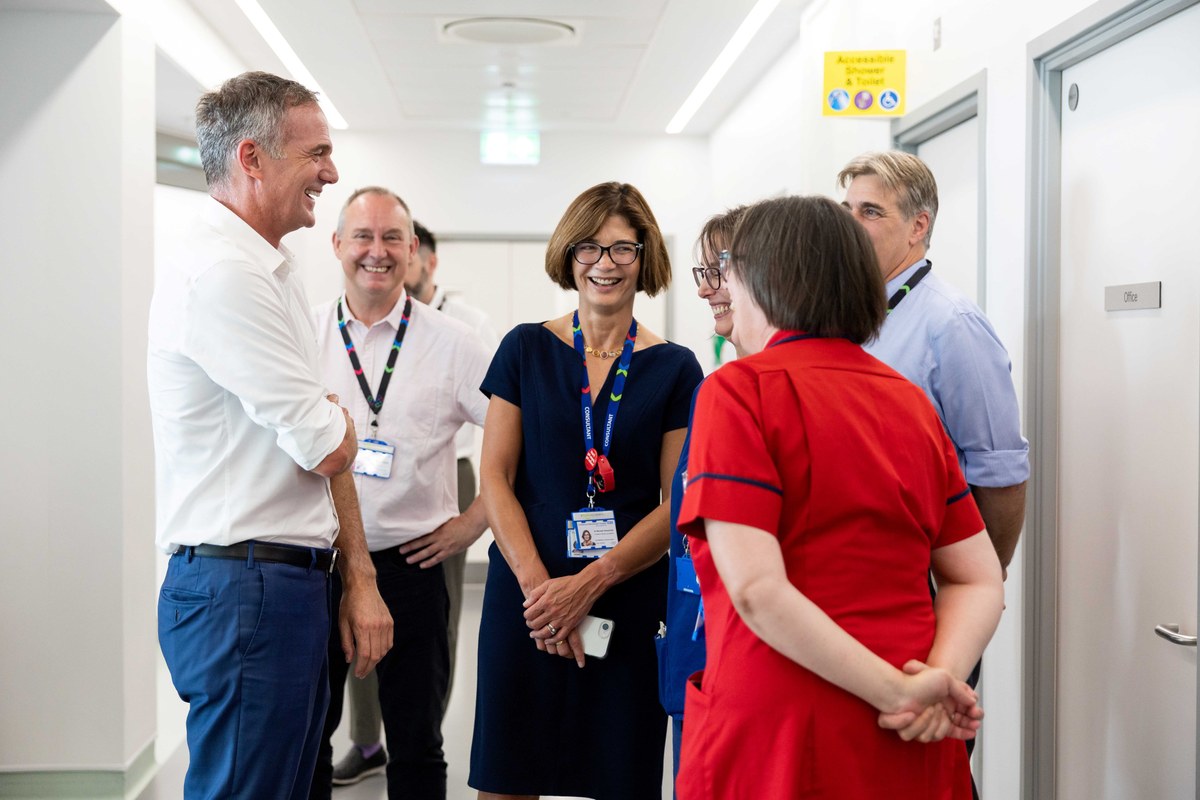
On 13 August, Peter Kyle and the DSIT team were welcomed by Roger Chinn, Chief Medical Officer, Marcella Vizcaychipi, Chief Clinical Information Officer, Gary Davies, Hospital Medical Director for Chelsea, and many of our staff demonstrating the innovative ways the Trust is currently harnessing the use of AI in both clinical care and administrative work flows.

A key part of the Exemplar Programme is the Government’s commitment to roll out the use of AI in discharge summaries, something the Trust is currently piloting. As part of the NHS Federated Data Platform (FDP) programme, the Trust is using AI and data tools to improve the way patients move through our hospitals—from admission to discharge. This includes, automatically identifying patients ready for discharge to free up beds, matching last-minute outpatient slots with patients who can attend at short notice, and reducing paperwork, freeing up staff time for direct patient care.
Find out more about the different ways the trust is adopting AI to improve care.