Please note: There is currently a national shortage of some banded copper IUDs (copper coils), which may affect availability at your appointment. We are working to manage the supply issue, but we may not always have a copper IUD available when you attend. Hormonal coils (IUSs) are not affected by this supply issue and are also highly effective methods of contraception.
Intrauterine contraception (the coil)
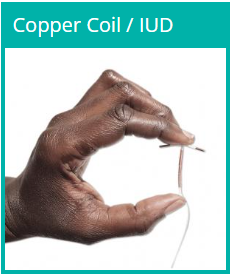
Intrauterine contraception (‘the coil’) is a device inserted into the uterus (womb) to prevent pregnancy. There are two main types—the IUD (‘copper coil’) and the IUS (‘hormonal coil’). Both are very effective at preventing pregnancy and can last up to ten years, depending on the type of device you have fitted.
Contraceptive implant
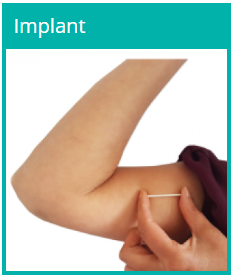
The contraceptive implant is a plastic rod that releases progestogen and is fitted into the upper part of your arm. The implant can be removed at any time and a new implant can be inserted at the same time if you wish to replace it.
The contraceptive implant (Nexplanon) can now be used for up to 5 years instead of 3 years.
If you already have an implant, you do not need to replace it at 3 years
It will continue to work safely and effectively for up to 5 years
If you're unsure when your implant was fitted or when it needs replacing, please contact your clinic
Contraceptive pill
The combined pill (‘the pill’) is taken every day, usually with a week off once a month (for a period). It contains two hormones which are very similar to the body's own hormones. It is easy to start and stop but can be difficult to remember to take every day.
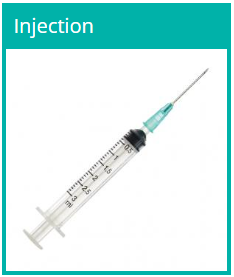
The injection (or depo) is given into the bottom or thigh every three months. It contains a hormone called progestogen which is very similar to the body's own hormones. Long-lasting and convenient, it can stop periods temporarily.
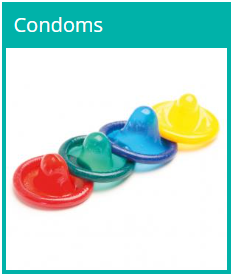
There are two different types of condoms: condoms worn on the penis and condoms worn inside the vagina. Condoms are made from very thin latex, synthetic nitrile, polyisoprene or polyurethane and can be used for vaginal, oral and anal sex.
The size and fit of condoms worn on the penis is important so that they are comfortable and do not break or slip off. Condoms are the only contraceptive method that can help prevent both pregnancy and STIs.
Emergency contraception can be used to help reduce the risk of pregnancy after unprotected sex, although it must be used within 5 days. The most effective method is the emergency IUD (copper coil).
If you have had unprotected sex and are not using a regular method of contraception, or if you have had a problem with your regular method (eg missed pill or broken condom), we recommend that you contact us to discuss emergency contraception. Please call the clinic on 020 8321 5718 or 020 8630 3295 for advice.
If you are aged 16 or over and live in Brent, City of London, Ealing, Hackney, Hammersmith and Fulham, Harrow, Kensington and Chelsea, Lambeth, Southwark or Westminster, you can order free contraception via Sexual Health London.
We do not currently provide the contraceptive ring (NuvaRing®)—please see your GP.
You can book an initial telephone appointment and one of our clinical team will call you to discuss your options, answer any questions you may have and book the most appropriate face-to-face appointment.
Or you can book a face-to-face appointment, for example to start contraception or change your current method of contraception (pill, patch, ring or injection).
Having an IUD/IUS fitted or replaced
If you are interested in having an IUD/IUS fitted or need to have your device replaced, please watch the following video before booking an appointment:
When you come in for an IUD/IUS, you must not be at risk of pregnancy. This means:
Using a hormonal method of contraception (pill, patch, ring, injection or implant) until the day of your appointment, or
Abstaining from sex for at least 3 weeks before your appointment or since the start of your last period
If you already have an IUD or IUS and wish to replace it, you must ensure you avoid any unprotected sex in the 7 days before your appointment.
The majority of women can book directly into an IUD/IUS fitting appointment. We recommend having a pre-insertion appointment to discuss the procedure with a doctor or nurse if:
You are aged 17 or younger
You are aged 50 or older
You require a translator
You have a history of problems with your uterus or ovaries (eg fibroids)
You have had a baby within the last 4 weeks
You have recently had an abortion or miscarriage
You have had a difficult or failed insertion of an IUD/IUS in the past
You have not fully understood the information above and wish to discuss it with a doctor or nurse in person
Please note: We do not fit the Mirena IUS for the purposes of hormone replacement therapy (HRT) or for the treatment of gynaecological conditions (eg endometriosis), unless you also require the IUS for contraception.
The clinics are staffed by both male and female clinicians—if you have a preference, please mention this when you call to book your appointment.
Having an IUD/IUS removed
If you wish to have an IUD or IUS removed and do not wish to have it replaced, please call the clinic to book an appointment or attend a walk-in clinic. To avoid any risk of pregnancy following removal, please ensure you do not have any unprotected sex in the 7 days before your appointment.
Unplanned pregnancy
If you are worried you may be pregnant, you should do a pregnancy test from the first day of your missed period or at least 21 days after you last had unprotected sex.
If the result is positive and you wish to continue with the pregnancy, you should inform your GP as soon as possible.
If you are unsure, you can attend any of our clinics to discuss your options with a doctor, nurse or Sexual Health Adviser. Please note that we do not provide abortion services within our clinics.