

AI tool that can spot heart disease in less than 2 seconds to be trialled at Trust
03 September 2026
Latest research presented at the European Society of Cardiology congress in Munich, highlights how AI can detect warning signs in a routine ECG.
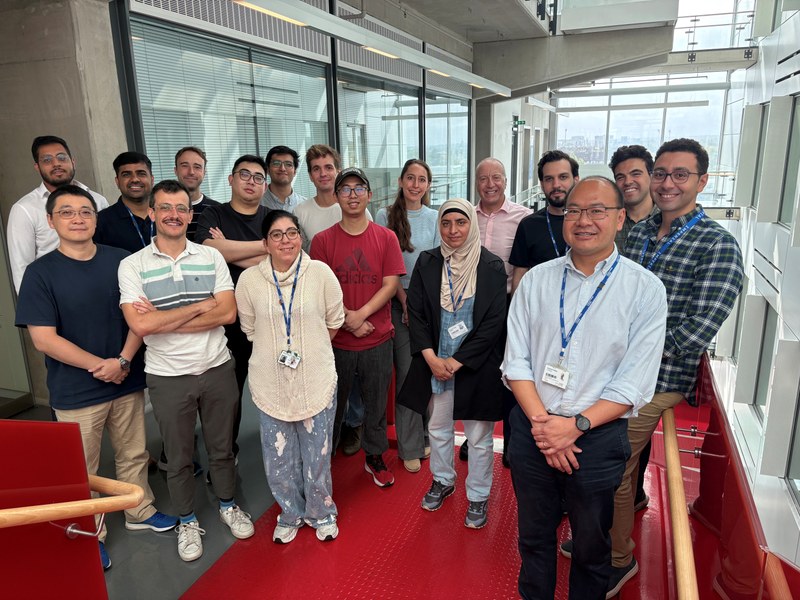
Professor Fu Siong Ng, Consultant Cardiologist, Dr Ahmed El-Medany, Clinical Research Fellow, and their team from Chelsea and Westminster Hospital NHS Foundation Trust and Imperial College London presented latest research funded by the British Heart Foundation at the European Society of Cardiology (ESC) Congress in Munich this weekend. Their work highlights how artificial intelligence (AI) could detect signs of heart failure and heart valve disease from a routine ECG.
The ECG, developed more than a century ago, is one of the most common tests in medicine, with around a billion performed worldwide each year. It measures the electrical activity of the heart, and is routinely used to diagnose conditions such as heart attacks and abnormal heart rhythms.
But an ECG often contains far more information than the human eye can typically see - which AI can now detect in less than two seconds. Researchers first trained the technology on ECGs from millions of patients, then tested it on more than 65,000 ECGs from hospital patients in the US. It was able to identify up to 81 per cent of patients who had heart failure – detecting reduced pumping function of the heart's main chamber – and also identified up to 90 per cent of patients with a common type of heart valve disease.
The NHS trial will recruit patients who are being treated at Chelsea and Westminster Hospital, West Middlesex University Hospital and Hammersmith and St Mary’s hospitals, in London, as well as Bristol Royal Infirmary and Southmead Hospital in Bristol.
The technology cannot be used on its own to definitively diagnose or rule out heart failure or heart valve disease, but it gives a strong indication that someone may have these conditions from their ECG. Someone judged as high-risk could be sent rapidly for an ultrasound heart scan called an echocardiogram, if this technology became available in the future. That could mean a quicker diagnosis which might allow them to start treatment earlier.
The AI is now being tested on ECGs from 590 NHS patients across London and Bristol, and the team say the AI ECG technology could be two years away from being used routinely for patients.
This work has received significant media coverage, including features in The Guardian, The Telegraph, The Times, The Sun, and the Daily Mirror.