Protein after bariatric surgeryhttps://www.chelwest.nhs.uk/your-visit/patient-leaflets/bariatric-dietetics/protein-after-bariatric-surgeryhttps://www.chelwest.nhs.uk/++resource++plone-logo.svg
Protein after bariatric surgery
This information is designed to provide you with more information about the importance of protein-rich foods in your diet after bariatric surgery.
Why is protein important to have in my diet?
Protein is important because it:
is an essential building block for the body and helps preserve muscle mass as you lose weight
is necessary for growth and repair, including recovery after surgery
helps you feel fuller for longer and supports achieving a healthy weight
helps your body fight infections
After bariatric surgery, it is important to have a protein-rich food at each meal.
Ideally, you should aim to have 70–100g of protein a day.
Example high-protein meal plan
Breakfast
Small pot of high-protein yoghurt (20g protein), 2 tablespoons of chia seeds (5g protein) and mixed berries.
Protein: 25g
Snack
30g unsalted mixed nuts.
Protein: 6g
Lunch
Protein bagel thin, 50g chicken breast and cottage cheese, served with a side salad.
Protein: 25g
Snack
2 Babybel Light with carrot and pepper sticks.
Protein: 12g
Dinner
1 salmon fillet, 80g peas and 2–3 new potatoes.
Protein: 35g
Good sources of protein
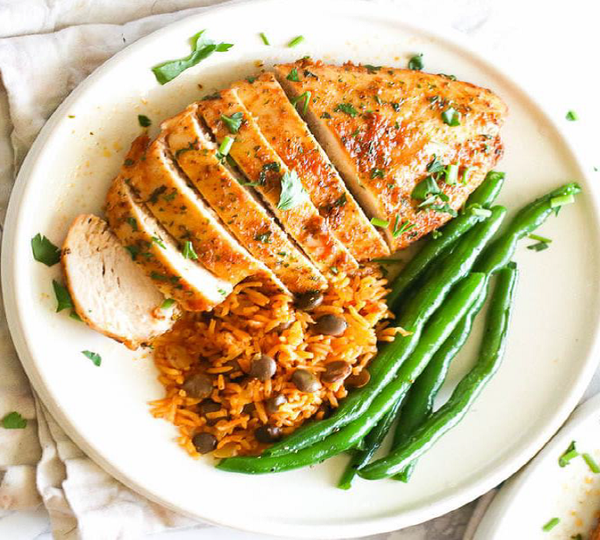
red meat, poultry and fish
eggs
beans and pulses
dairy foods, such as milk, cheese and yoghurt
non-dairy alternatives, such as soya-based and lactose-free alternatives
tofu and Quorn
These foods are also good sources of some essential vitamins and minerals, including:
vitamins A, B and D
iron and zinc
Top tips
Aim to eat the protein-rich food in your meal first.
Plan your menu in advance and base your meals and snacks around foods that are high in protein.
Choose low-fat varieties or lean meat and remove any visible fat. Avoid adding fat when cooking these foods.
Chew meat, chicken and fish well before swallowing to avoid food getting stuck.
Eat slowly.
You may find roasted meats more difficult to tolerate. If this is the case, alternative cooking methods may be easier to tolerate, such as stewing, casseroling, slow cooking or mincing meat, or choosing wafer-thin meats.
Amount of protein in foods
The following tables show the amount of protein in different portion sizes.
Red meat
Food
Portion size
Protein
Lean roast beef, lamb or pork
40g (1 slice)
11–12g
Grilled lamb chop
54g (1 small chop)
14g
Grilled lamb steak
65g (1 small slice)
18g
Grilled pork chop
68g (1 small chop)
20g
Raw minced beef or lamb
100g
19–20g
Sliced ham
30g (1 slice)
6g
Wafer-thin ham
12g (1 slice)
2g
Corned beef
30g (1 slice)
8g
Stewed or casseroled meat
40g (approximately 4 pieces)
14–15g
Low-fat meat paste
17g (1 tablespoon)
3g
Low-fat meat pâté
40g
7.2g
Offal
Food
Portion size
Protein
Roasted lamb heart
100g (half a whole heart)
25.3g
Cooked kidney
40g (1 tablespoon)
9–10g
Liver, fried or grilled
40–50g (1 slice)
12–15g
Stewed oxtail
50g (4–5 pieces)
15g
Poultry
Food
Portion size
Protein
Skinless chicken breast
95g (1 small chicken breast)
30g
Chicken drumstick
75g (1 drumstick)
19g
Roast or grilled turkey
70g (1 small breast fillet)
24.5g
Raw turkey mince
100g
24.9g
Fish and seafood
Food
Portion size
Protein
Baked cod
60g (half a fillet or 1 small fillet)
13g
Grilled tuna steak
75g (1 small steak)
23g
Trout fillet
60g (half a fillet)
13g
Salmon steak
60g (half)
15g
Mackerel
45g (1 small fillet)
9g
King prawns
50g (approximately 8)
11g
Tinned tuna in brine
70g (half a tin)
16g
Tinned sardines in tomato sauce
60g (half a tin)
10.2g
Tinned pilchards
70g (half a tin)
9g
Baked fish cake
52g (1 small fish cake)
5g
Seafood stick or crab stick
1 stick
1.5g
Dairy and protein products
Food
Portion size
Protein
Half-fat cheddar cheese
30g (small matchbox-sized piece or 3 small slices)
10g
Low-fat cottage cheese
60g (1½ tablespoons)
6g
Light soft cheese triangle
17.5g (1 triangle)
2.4g
Low-fat soft cheese
30g (½ tablespoon)
2g
Skimmed or semi-skimmed milk
200ml (⅓ pint)
7g
Skimmed milk powder, such as Marvel, Nestlé Nido or supermarket brands, or whey protein powder
60g (4 tablespoons)
21g
Semi-skimmed milk with skimmed milk powder mixed in well
1 pint of milk with 4 tablespoons of milk powder
40g
Sanatogen protein powder
1 tablespoon
10g
Soya milk
200ml (⅓ pint)
7g
Semi-skimmed lactose-free milk
200ml (1 glass)
7.8g
Meal replacement shake
200ml (1 glass)
9g
Complan soup
57g sachet, made with milk or water
9g
Build Up soup
49g sachet
7.1g
Build Up shake
38g sachet in 200ml milk
14.9g
SlimFast smoothie or shake
325ml (1 bottle)
14g
High-protein yoghurt, such as Arla, FAGE or Skyr
100g
10g
Low-fat, low-sugar yoghurt
150g (1 small pot)
8.5g
Yoghurt drinks, such as Actimel, Benecol, EasiYo, Vitality or Yop
1 bottle
2–3g
Vegetarian foods
Food
Portion size
Protein
Baked beans
65g (⅓ small tin or 2 heaped tablespoons)
3g
Canned kidney beans
30g (1½ heaped tablespoons)
2g
Cooked mung beans
30g (1½ heaped tablespoons)
2g
Cooked chickpeas
30g (1 heaped tablespoon)
2g
Cooked lentils
60g (1½ heaped tablespoons)
5g
Hummus
60g (golf-ball sized portion or 2 tablespoons)
4.6g
Quorn chicken-style pieces or Quorn mince
50g (approximately 14 pieces)
9g
Steamed tofu (soya bean curd)
85g (approximately the size of a deck of cards)
8.1g
Okra (lady fingers)
1½ heaped tablespoons (½ cup)
1.5g
Mixed nuts, peanuts, almonds or cashews
30g (small handful, golf-ball sized, or 2 tablespoons)
6–7g
Eggs
Food
Portion size
Protein
Scrambled, boiled or poached egg
1 egg
7g
Plain omelette
1 egg
5g
Cheese omelette
1 egg
10g
Vegan foods
Food
Portion size
Protein
Baked beans
65g (⅓ small tin or 2 heaped tablespoons)
3g
Soya chunks or mince
½ cup (40g)
7–10g
Cooked soya beans
½ cup (40g)
7–10g
Canned kidney beans
30g (1½ heaped tablespoons)
2g
Cooked mung beans
30g (1½ heaped tablespoons)
2g
Cooked chickpeas
30g (1 heaped tablespoon)
2g
Cooked lentils
60g (1½ heaped tablespoons)
5g
Hummus
60g (golf-ball sized portion or 2 tablespoons)
4.6g
90% soya protein
1 scoop (20g)
14g
Hemp protein powder
1 scoop (30g)
14g
Pea protein powder
1 scoop (30g)
23g
Soya milk
200ml
7g
Protein water
500ml
30g
Soya yoghurt
150g (1 small pot)
4g
Soya milk with protein powder
200ml with 1 scoop (30g) of soya or hemp protein powder
30g (small handful, golf-ball sized, or 2 tablespoons)
6–7g
Roasted soya snacks
30g (2 tablespoons)
11g
Peanut or almond butter
2 tablespoons
3–4g
Tempeh
83g (½ cup)
15g
Seitan (vegan steak)
84g (1 slice)
15g
Tofu
100g (½ pack or 4 tablespoons)
8–10g
Cooked quinoa
28g (3 tablespoons)
1.2g
Cooked spinach
28g (3 tablespoons)
0.7g
Cooked broccoli
28g (3 tablespoons)
0.7g
Okra (lady fingers)
28g (3 tablespoons)
0.7g
Mung bean sprouts
28g (3 tablespoons)
0.4g
Toast
1 slice
4g
Vegetable bean burger
1 burger
7–16g
Protein supplementation and bariatric surgery
After bariatric surgery, it can be difficult to meet your protein requirements as your food intake and stomach will be small. You will also not absorb protein as efficiently as before surgery.
Protein is essential for your body to heal and maintain muscle mass while you are losing weight.
Ideally, you should aim to include at least 70g of protein in your diet each day.
Using a protein supplement can be a useful way to achieve this, particularly in the first 6 months following your operation.
The ideal protein supplements are made from dairy protein, such as whey or casein protein, egg white protein or soya protein. These are the most readily absorbed by your body and contain complete protein.
A complete protein, or whole protein, is a source of protein that contains all 9 essential amino acids needed to meet your dietary requirements in the correct proportions to support the functioning of the body.
Whey protein powder is the most readily available protein supplement and can be found in many supermarkets and health food stores. Ideally, it should be made with skimmed or lactose-free milk as this will further increase the protein content for the same volume of fluid.
Please speak to your dietitian if you need lactose-free or vegan protein shake options.
Protein supplement options
skimmed milk powder
high-protein yoghurts
high-protein ready-made shakes
protein powders
protein bars
protein bites
Protein challenge
Aim for 70–100g of protein daily.
Day 1
Meal
Protein (grams)
Breakfast
Snack
Lunch
Snack
Dinner
Total
Day 2
Meal
Protein (grams)
Breakfast
Snack
Lunch
Snack
Dinner
Total
Day 3
Meal
Protein (grams)
Breakfast
Snack
Lunch
Snack
Dinner
Total
Contact the Bariatric Dietitians
If you have any questions, please contact the Bariatric Dietitians.