Liver shrinkage diet for Bariatric Surgeryhttps://www.chelwest.nhs.uk/your-visit/patient-leaflets/bariatric-dietetics/liver-shrinkage-diet-for-bariatric-surgeryhttps://www.chelwest.nhs.uk/++resource++plone-logo.svg
Liver shrinkage diet for Bariatric Surgery
Introduction
What is the purpose of a liver shrinkage diet?
A liver shrinkage diet (LRD) is a low-energy (calorie) diet that is particularly low in carbohydrate and fat.
By following a liver shrinkage diet, your body will use up stored carbohydrate (glycogen) from the liver. As the glycogen and some water leave the liver, the liver will shrink and become softer, more flexible and easier to move during surgery.
During laparoscopic (keyhole) surgery, the liver has to be lifted out of the way to access the stomach lying beneath it. Most people needing bariatric surgery have a large, fatty liver, which can make keyhole surgery more difficult.
A large, fatty liver makes it harder for the surgeon to see and gain access to the stomach underneath. This can increase the duration of your surgery and therefore your time under general anaesthetic.
It can also be dangerous, as your liver could bleed heavily during surgery or there could be injury to other organs. If this happens, the surgeon may have to perform open surgery instead of keyhole surgery.
If you do not follow the liver shrinkage diet and your liver has not shrunk, surgery may be considered unsafe and the surgeon may cancel the surgery on the day.
How long will I have to follow the liver shrinkage diet?
The duration of the diet is based on the criteria below:
Criteria
Duration
BMI is lower than 50 kg/m²
2 weeks
BMI is greater than 50 kg/m² and/or you have additional comorbidities, e.g. type 2 diabetes, sleep apnoea or non-alcoholic fatty liver
4 weeks
BMI: body mass index (kg/m²)
What are the liver shrinkage diet options?
Option 1: SlimFast meal replacement diet
Option 2: Milk and yoghurt diet
Option 3: Food-based diet
All of the above diets are designed to provide:
Around 800–1,000 kcal
Less than 100 g of carbohydrate
Low fat
High protein
You must choose one of the options and follow the instructions for that option. Please do not mix different diet options, as this may reduce the effectiveness of the diet.
Option 1: SlimFast® meal replacement diet
SlimFast® is a nutritionally complete, low-calorie diet (LCD) meal replacement product. With this diet, you are required to have:
4 x 325 ml ready-made SlimFast® bottles per day
2 cereal bowls of salad or vegetables from the list below. These can be blended into soup, boiled, steamed, roasted or eaten raw.
Salad and vegetable choices
Artichoke
Asparagus
Aubergine
Broccoli
Brussels sprouts
Butternut squash
Cabbage
Carrot
Cauliflower
Celery
Courgette
Cucumber
Edamame beans
Green beans
Runner beans
Leek
Lettuce and other leafy greens
Mangetout
Marrow
Mushroom
Onion
Peppers
Pumpkin
Shallots
Spinach
Spring onion
Sugar snap peas
Swede
Tomato
Turnip
How can you make your meals more interesting?
Season your food: add herbs, chilli, spices, garlic, salt and pepper freely.
Skip ready-made dressings: avoid adding oil or salad dressings.
Lemon juice and vinegar, including balsamic vinegar, are allowed.
Keep hydrated: aim to have at least 2 litres of fluids per day, including water, sugar-free squash, herbal tea, black tea and black coffee without sugar.
You can have 1 salty drink a day to help maintain electrolyte levels. For example, dissolve 2 teaspoons of stock, Marmite®, Bovril® or consommé in a large glass of warm water.
Please note: You must not have the powdered version of SlimFast®, as it is high in calories and carbohydrate.
4 SlimFast® shakes per day provide:
816 kcal
60 g protein
86 g carbohydrate
20 g fibre
21 g fat
Option 2: Milk and yoghurt diet
This diet is based on milk, yoghurt and additional fluids only.
Alcohol and all other food sources should be avoided for the duration of this diet.
Daily intake
3 pints of skimmed, semi-skimmed, lactose-free or soya milk per day. The milk can be hot or cold and flavoured with vanilla essence or sugar-free syrups, e.g. Crusha or Monin.
2 x 125 g low-fat plain or natural yoghurt, or 0% fat yoghurt, per day. Aim to avoid fruit yoghurts as they can be high in sugar and fat. You can add sugar-free syrups or flavourings to plain or natural yoghurt to adjust the taste if needed.
An additional minimum of 2 litres of fluid per day, e.g. water, calorie-free or low-calorie squash or flavoured water, tea, coffee and fruit or herbal teas.
Avoid adding sugar to your tea or coffee. Sweeteners can be used as an alternative. You can use milk from your daily allowance in tea or coffee.
You will need to take supplements daily as this diet is not nutritionally complete. Examples include Sanatogen A–Z, Tesco’s A–Z and Centrum Advance/Performance.
You can have 1 or 2 salty drinks a day to help maintain electrolyte levels. For example, dissolve 2 teaspoons of stock, Marmite®, Bovril® or consommé in a large glass of warm water.
Example meal plan
Meal
Suggestions
Breakfast
400 ml milky coffee 125 g yoghurt (low-fat plain or 0% fat)
Snack 1
300 ml glass of milk
Lunch
Oxo or Bovril® drink 300 ml glass of milk
Snack 2
Cup of tea with 100 ml of milk 300 ml glass of milk
Dinner
Oxo or Bovril® drink 125 g yoghurt (low-fat plain or 0% fat)
Snack 3
300 ml glass of milk
Option 3: Food-based diet
This diet is based on low-carbohydrate, low-energy, low-fat and moderate-protein meals, with additional fluids throughout the day.
Your meals should follow this format:
Breakfast:
1 carbohydrate portion
1 dairy portion
Lunch:
No carbohydrate
2 protein portions
2 vegetable portions
Evening meal:
2 carbohydrate portions
1 protein portion
1 vegetable portion
1 dairy portion
Snacks:
2 pieces of fruit per day – these can be eaten at any time
What is a portion?
Protein
One portion
Raw lean meat (beef, pork, lamb, chicken)
Size of a pack of playing cards (100 g)
Ham, turkey
4 thick or 8 thin packet slices of ham, chicken or turkey (100 g)
Skimmed or semi-skimmed milk Soya or lactose-free milk
1 medium glass (200 ml) or ⅓ pint
Low-fat or diet yoghurt, including soya yoghurt
1 small pot (150 g)
Light fromage frais
1 small pot (150 g)
Low-fat cheese, e.g. Brie, Camembert, Edam or reduced-fat Cheddar
1 matchbox-sized piece (30 g)
Light cream cheese
30 g
Cottage cheese
1 large pot (200 g)
Carbohydrates
One portion
Breakfast cereals, e.g. Bran Flakes, crispies or Special K
3 tablespoons
Muesli or porridge
2 tablespoons
Shredded Wheat or Weetabix
1
Bread or toast
1 medium slice
Pitta bread
½ pitta or 1 mini pitta
Wholemeal bread roll
½ bread roll
Crackers
3
Crispbreads
4
Chapatti
1 small
Rice, cooked
2 tablespoons
Couscous, cooked
2 tablespoons
Pearl barley, cooked
2 tablespoons
Quinoa, cooked
4 tablespoons
Pasta, cooked
3 tablespoons
Noodles, cooked
100 g
Potatoes
2 egg-sized potatoes
Sweet potato
1
Plantain
½ (100 g)
Yam
70 g
Cassava, cooked
50 g
Muesli bar
1
Fats
One portion
Butter or margarine
1 teaspoon
Reduced-fat or low-fat spread
2 teaspoons
Low-fat or light salad dressing
2 teaspoons
Oil, any type
1 teaspoon
Example meal plan
Meal
Portion
Suggestion
Breakfast
1 carbohydrate portion 1 dairy portion
3 tablespoons of cereal OR 1 Weetabix OR 2 tablespoons of porridge made with ⅓ pint (200 ml) of semi-skimmed milk OR 1 slice of toast or bread with 30 g low-fat cheese (a small matchbox-sized piece)
Snack
1 fruit portion
1 banana
Lunch
No carbohydrate 2 protein portions 2 vegetable portions
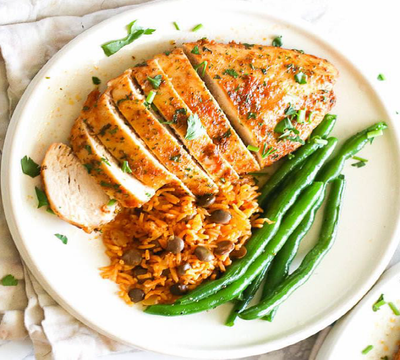
Grilled chicken breast (200 g) OR 1 can of tuna in spring water OR 60 g low-fat cheese OR 8 tablespoons of Quorn or tofu with 6 tablespoons of cooked mixed vegetables (boiled, steamed or roasted)
6 tablespoons of pasta shapes with minced beef in 4 tablespoons of homemade bolognese sauce and 1 matchbox-sized portion of grated low-fat cheese, with a side salad (small cereal bowl) OR 4 tablespoons of bean or chickpea stew with 4 tablespoons of cooked rice, 3 tablespoons of low-fat yoghurt and a mixed leaf, tomato and cucumber salad (small cereal bowl)
Foods to avoid
It is important to avoid foods that are high in sugar and fat. These include:
Sweets
Chocolate and cakes
Jelly
Ice cream
Sugary drinks, including fruit juice and fizzy drinks
Alcohol
Sugar added to hot drinks or food (sweeteners can be used as an alternative)
Crisps
Fried foods and takeaways
Creamy or ready-made pasta or meal sauces. Choose tinned tomatoes for cooking, e.g. in bolognese sauces, stews and casseroles
Meat or fish products coated in breadcrumbs. Choose fresh, lean options instead
Fluids
Aim to have a minimum of 2 litres of fluid each day, including:
Water
Tea or coffee (you can use milk from your daily dairy allowance – see above)
Sugar-free squash or sugar-free flavoured water
You will need to start taking a multivitamin and mineral supplement once daily, as this diet is not nutritionally complete. Examples include Sanatogen A–Z, Tesco’s A–Z and Centrum Advance/Performance.
Additional information
You may experience headaches or feel light-headed after starting the liver shrinkage diet. This is quite usual and should pass within the first few days.
Constipation can become a problem when following this diet because it contains very little fibre. You may need to take 1–2 sachets of Fybogel each day or another laxative in tablet or powder form to help prevent this. We do not recommend taking lactulose during the pre-operative liver shrinkage diet.
Patients taking insulin or gliclazide: if you have diabetes and take insulin injections or gliclazide tablets, please contact the healthcare professional who normally helps you manage your diabetes. It is likely that your insulin or gliclazide will need to be reduced because these diets are low in carbohydrate (less than 100 g) and may cause your blood glucose levels to fall lower than usual. Check your blood glucose levels 4 times a day. If you do not have a blood glucose meter, you can ask to have your blood glucose checked at your local pharmacy. Please contact your dietitian if you experience regular hypos (low blood glucose levels).
Some weight loss is expected while following the liver shrinkage diet. You may experience changes to your menstrual cycle during this period. Women with PCOS (polycystic ovary syndrome) may also ovulate and become fertile while following the liver shrinkage diet, so it is important to use contraception.
Please stop eating 6 hours before your surgery. You may drink water up to 2 hours before your surgery.